Academic
INFI.
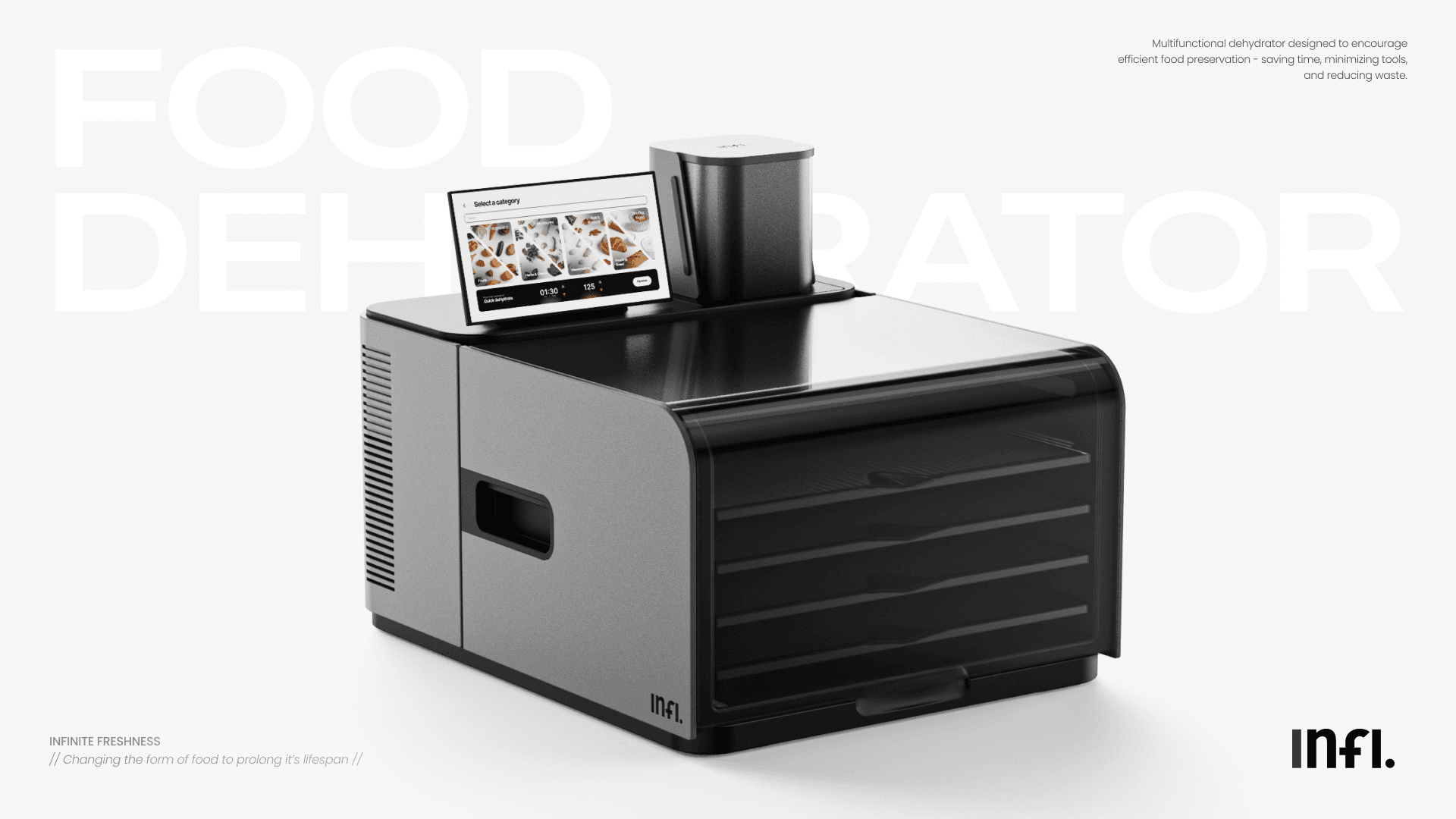
Multifunctional dehydrator designed to encourage efficient food preservation - saving time, minimizing tools, and reducing waste.
Project Type :
Individual
Industry :
Home appliance
Client :
GIA Houseware Competition
Project Duration :
12 weeks

Problem :
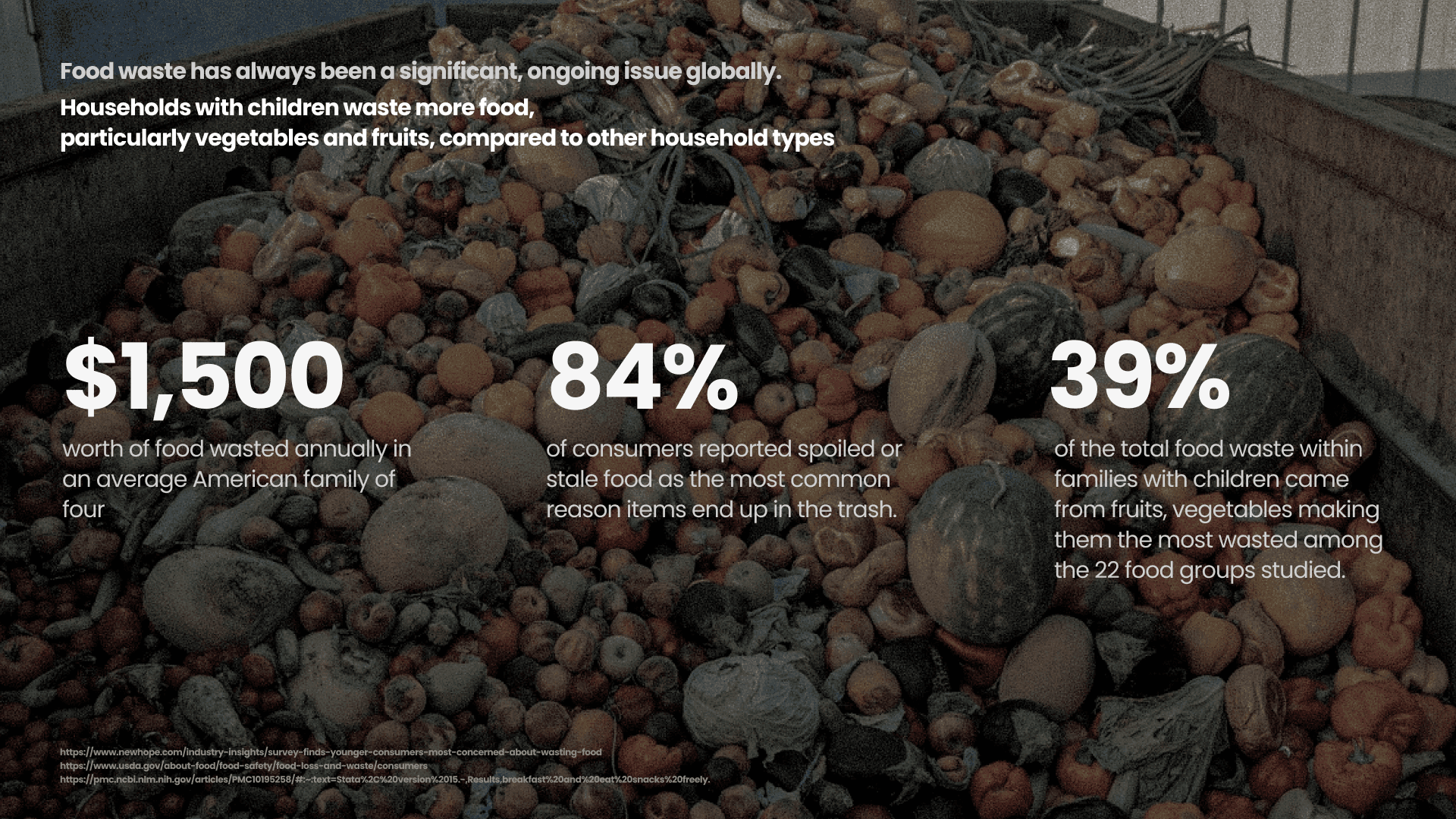
Food waste has long been a persistent issue, especially within households. Yet most existing solutions focus on managing food after it has already spoiled, leaving much of the food still destined to go to waste instead of preventing it in the first place.
CONCEPT :
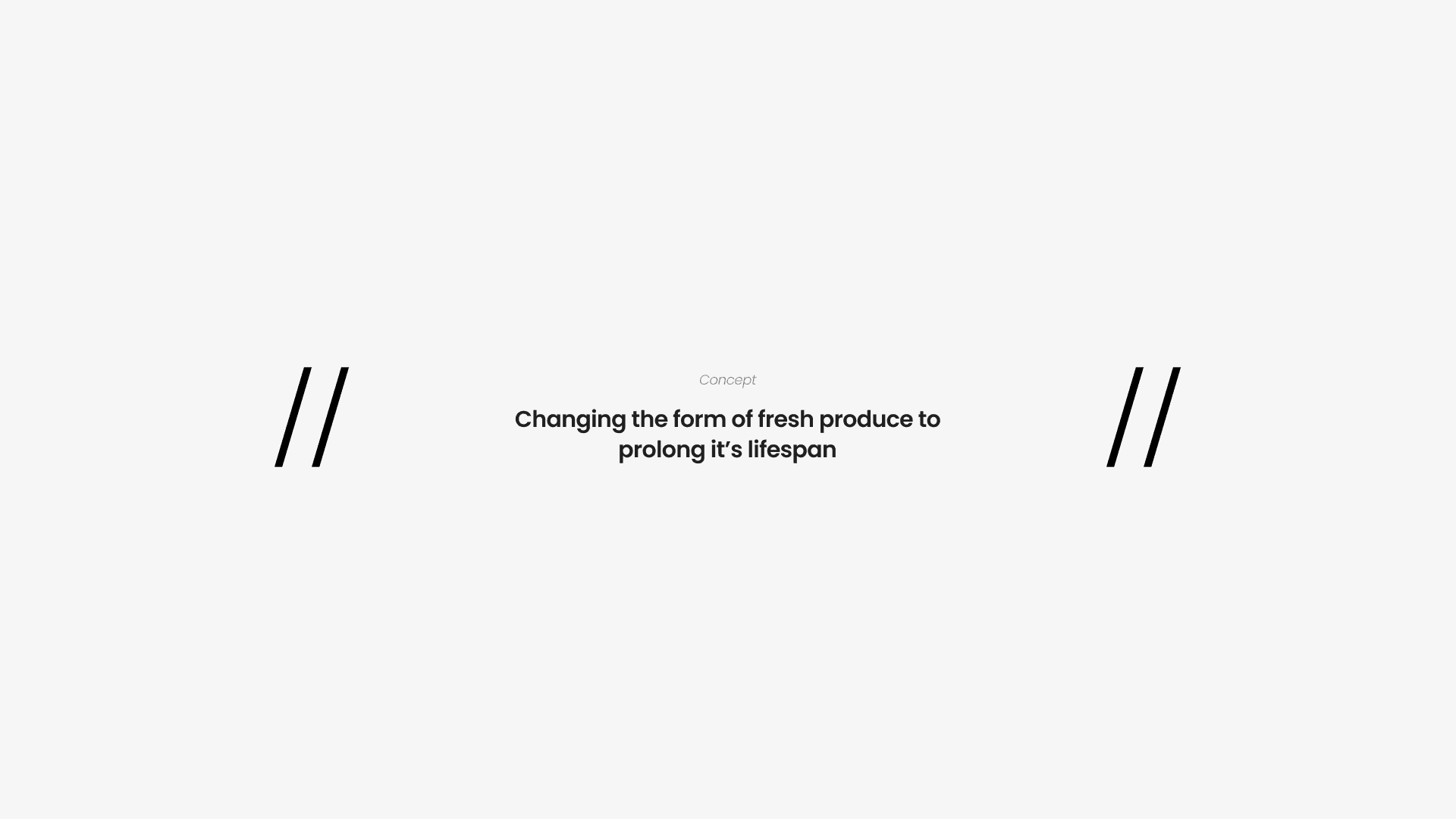
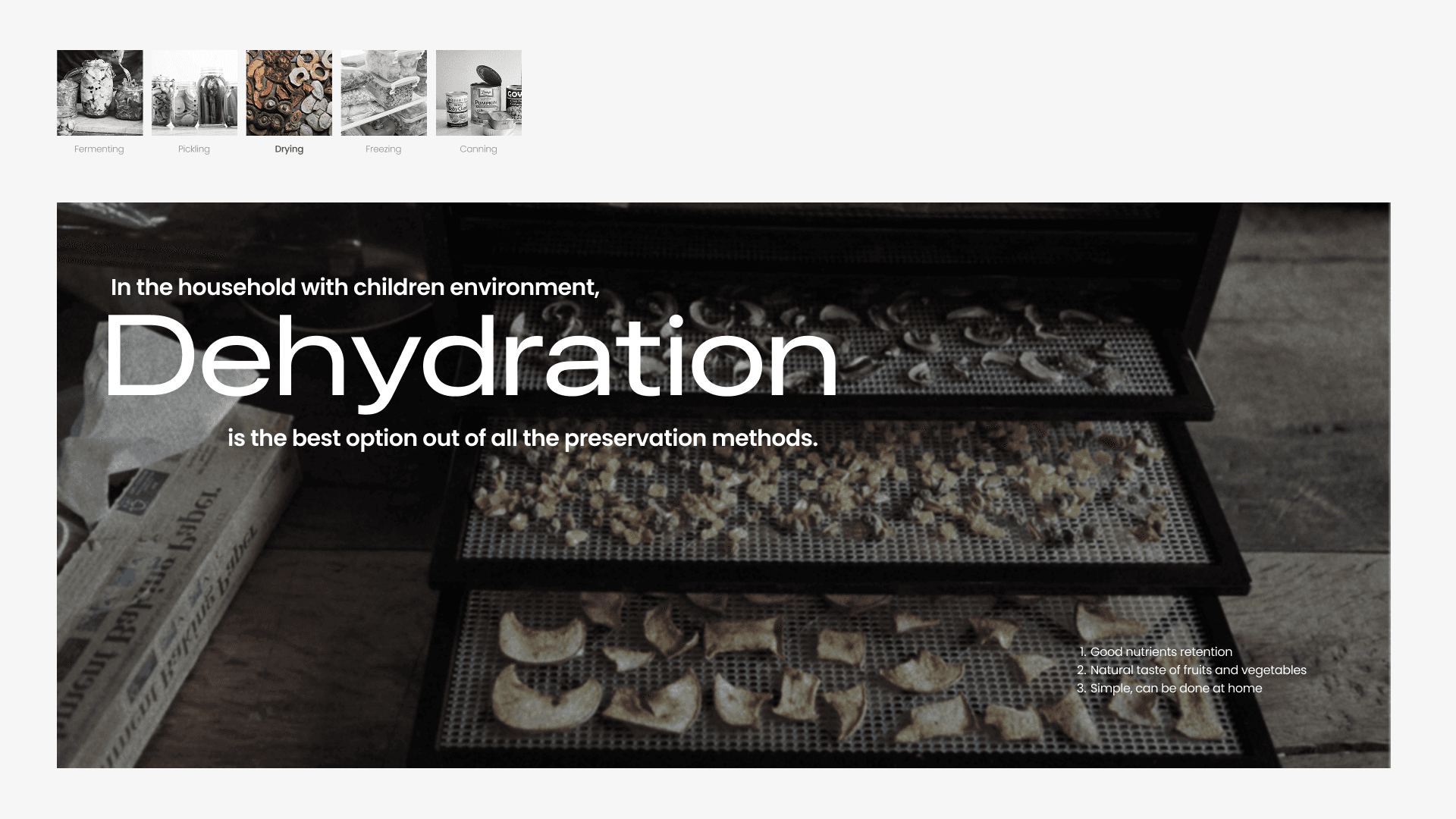
My idea is to transform the form of fresh produce to extend its lifespan. After exploring various food preservation methods, I selected dehydration as the most suitable approach for my target audience: households with children.
UNDERSTANDING THE USER :
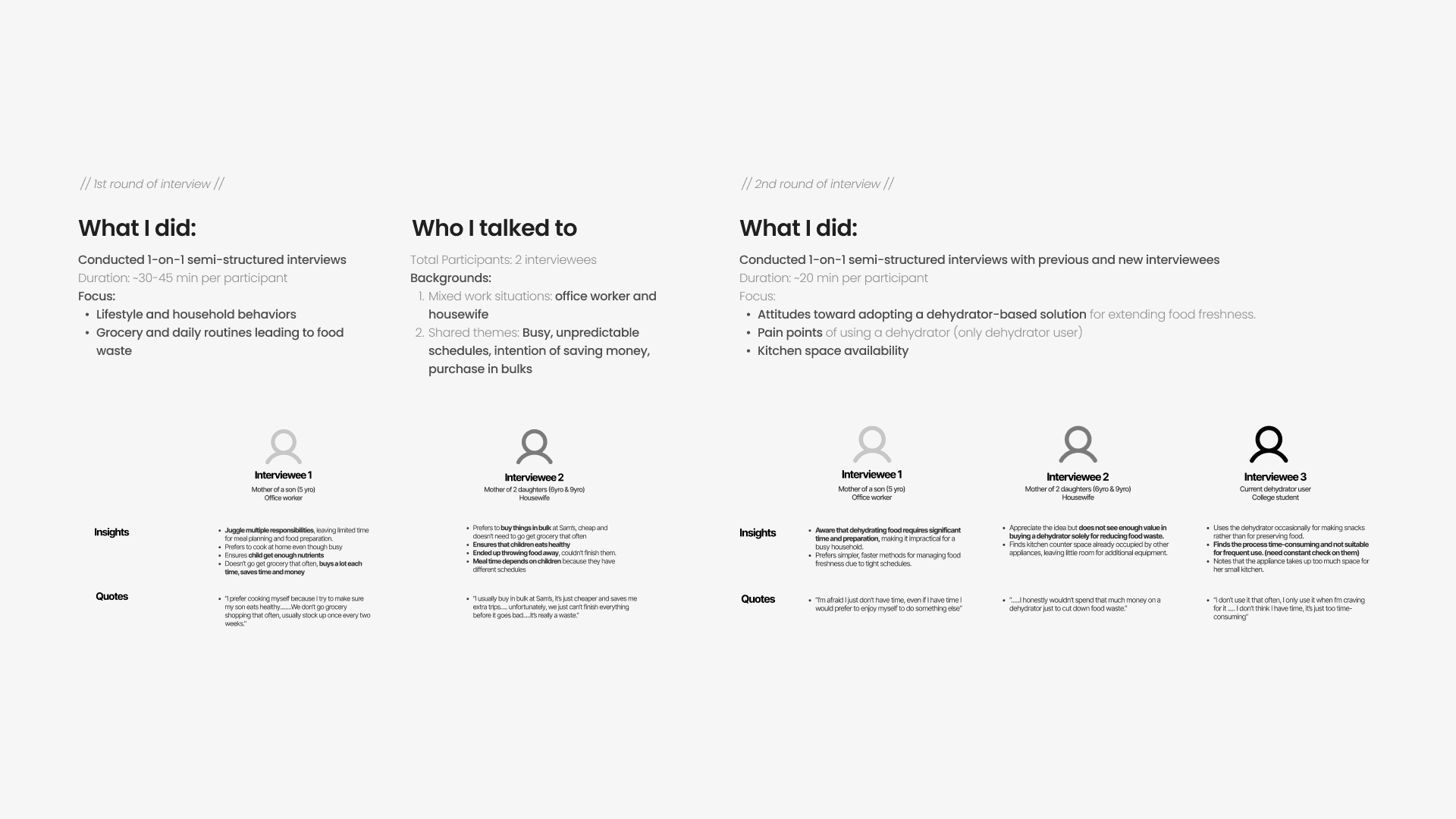
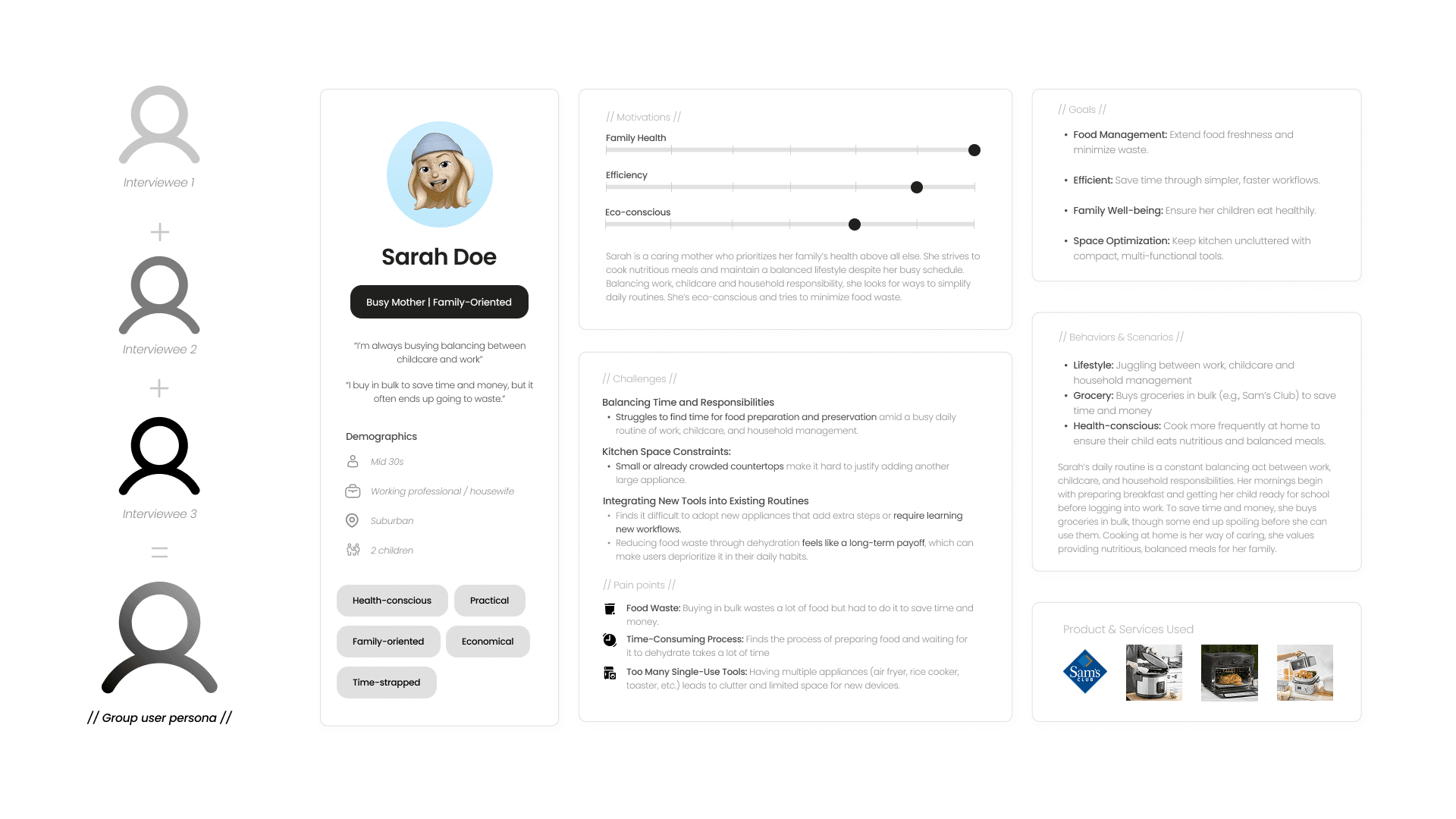
Through two rounds of interviews with households with children, I gained a deeper understanding of daily food management behaviors, challenges, and decision-making patterns.
A key insight was that most users do not perceive a strong need for a dedicated dehydrator solely to prevent food waste. Preserving food is important to them, but not enough to justify adding another appliance to an already crowded kitchen.
These insights informed a user persona centered around busy, family-oriented households seeking convenient, space-efficient, and low-effort ways to extend food lifespan while supporting healthier eating habits.
RESEARCH :
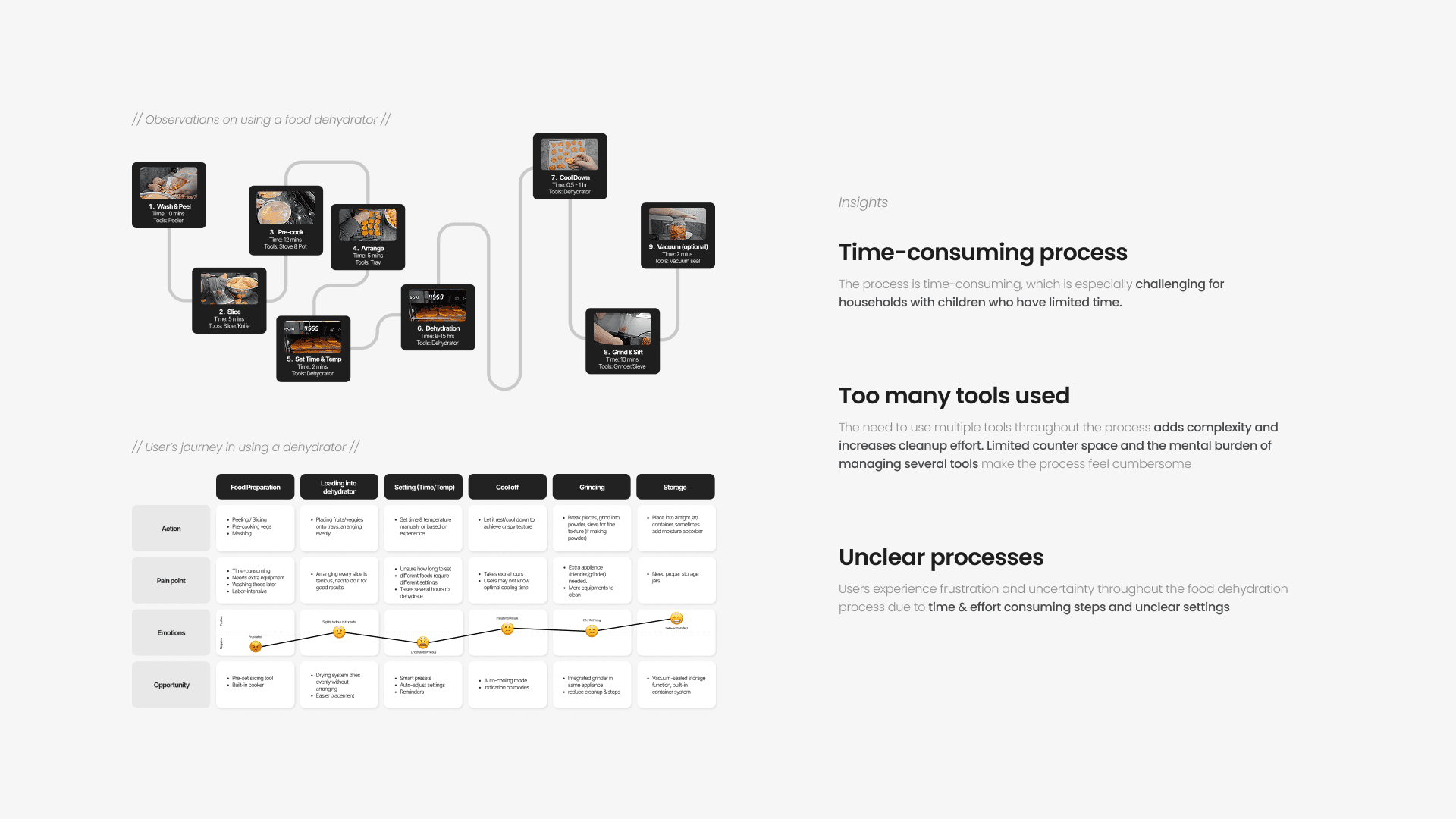
Keeping the user’s behavior in mind, I analyzed how users currently use food dehydrators and where friction occurs in the process.
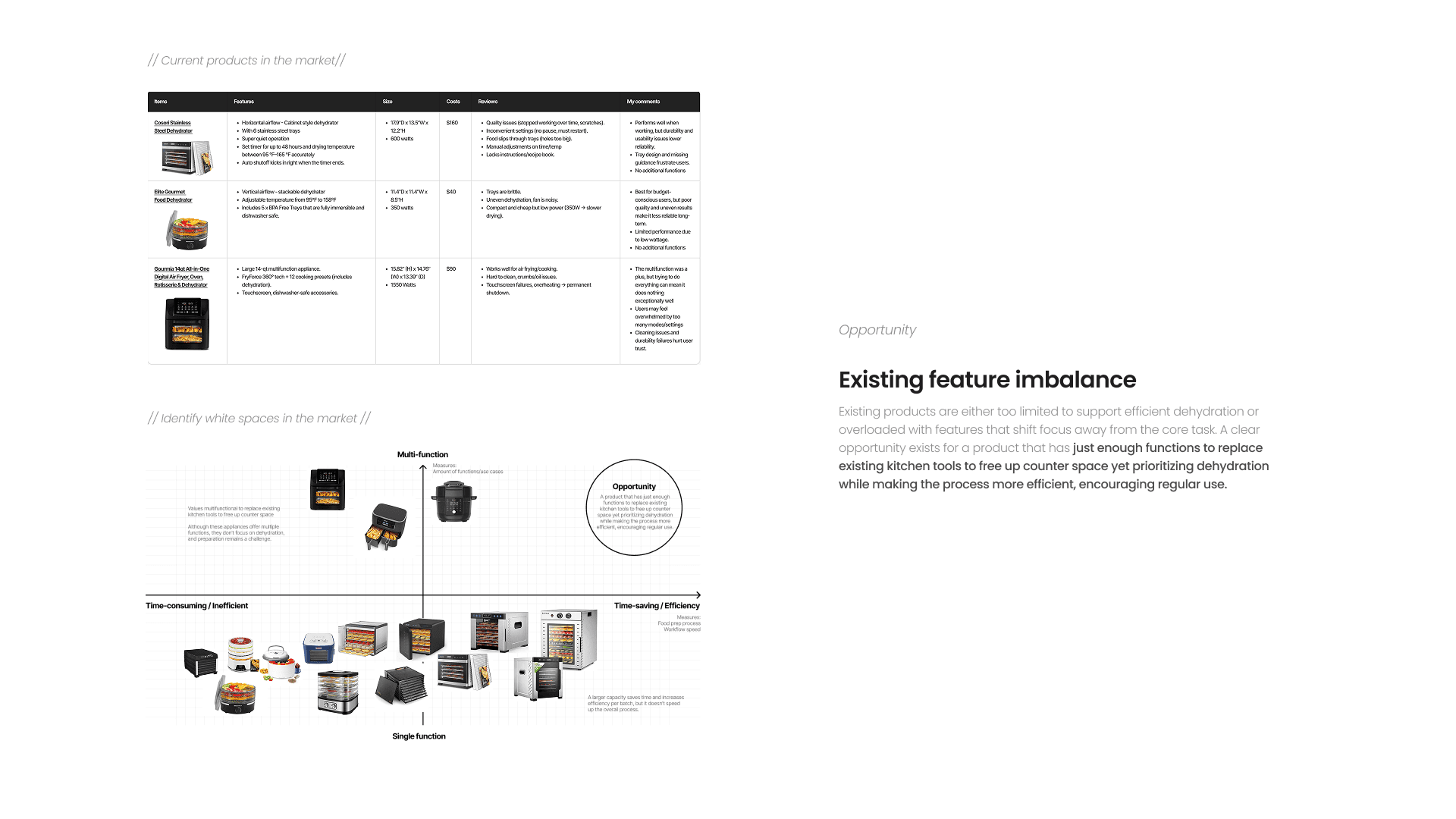
Mapping current products revealed a disconnect between market offerings and user perception. Existing dehydrators are either single-purpose appliances that feel unnecessary or multifunction devices that add complexity. Yet interviews showed that households do not see enough value in owning a dehydrator solely for food preservation. This highlights an opportunity to rethink dehydration not as an extra appliance, but as an integrated, space-conscious kitchen solution.
KEY PROBLEMS :
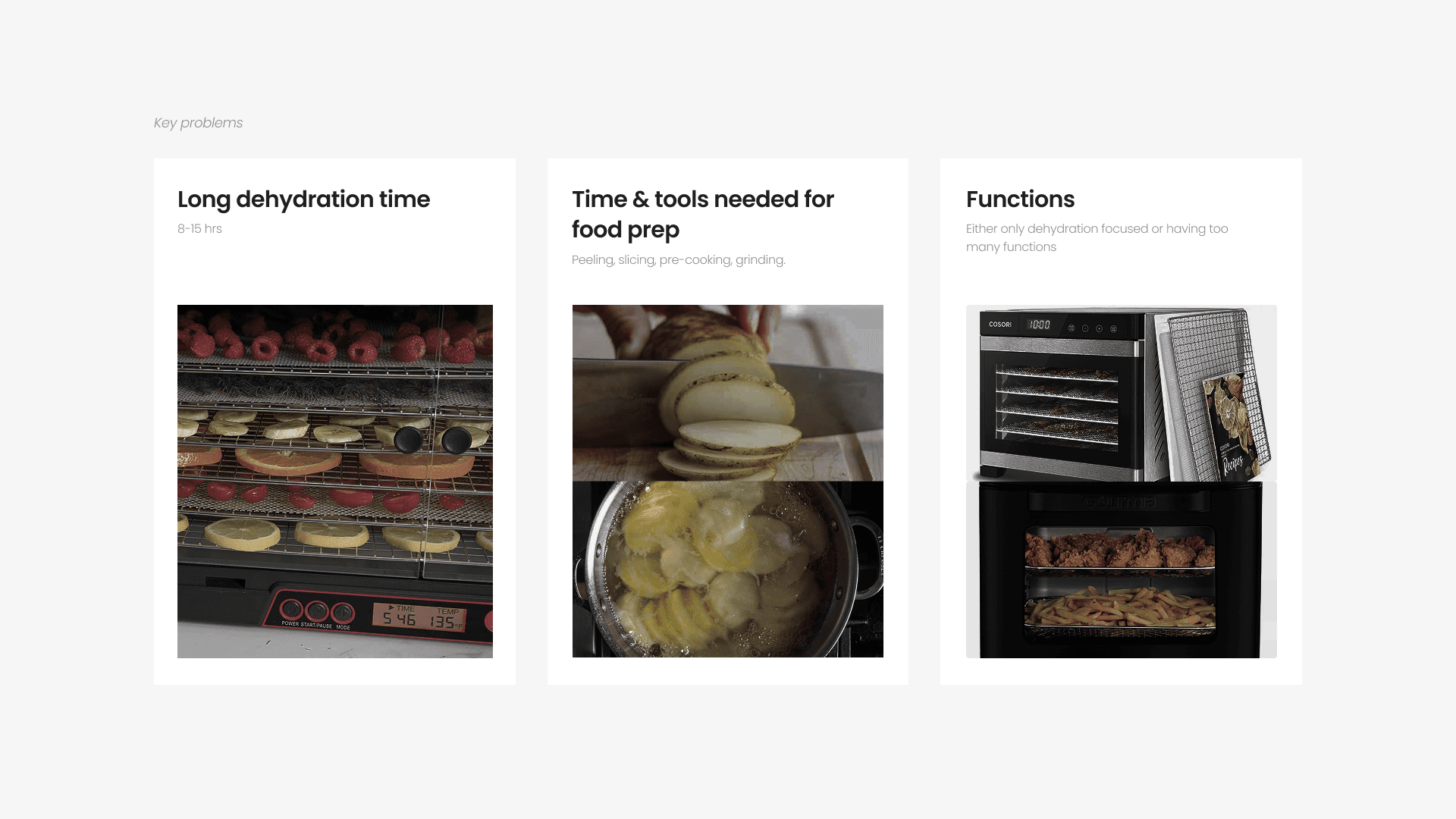
What is preventing regular use for food preservation?
FINAL DESIGN :
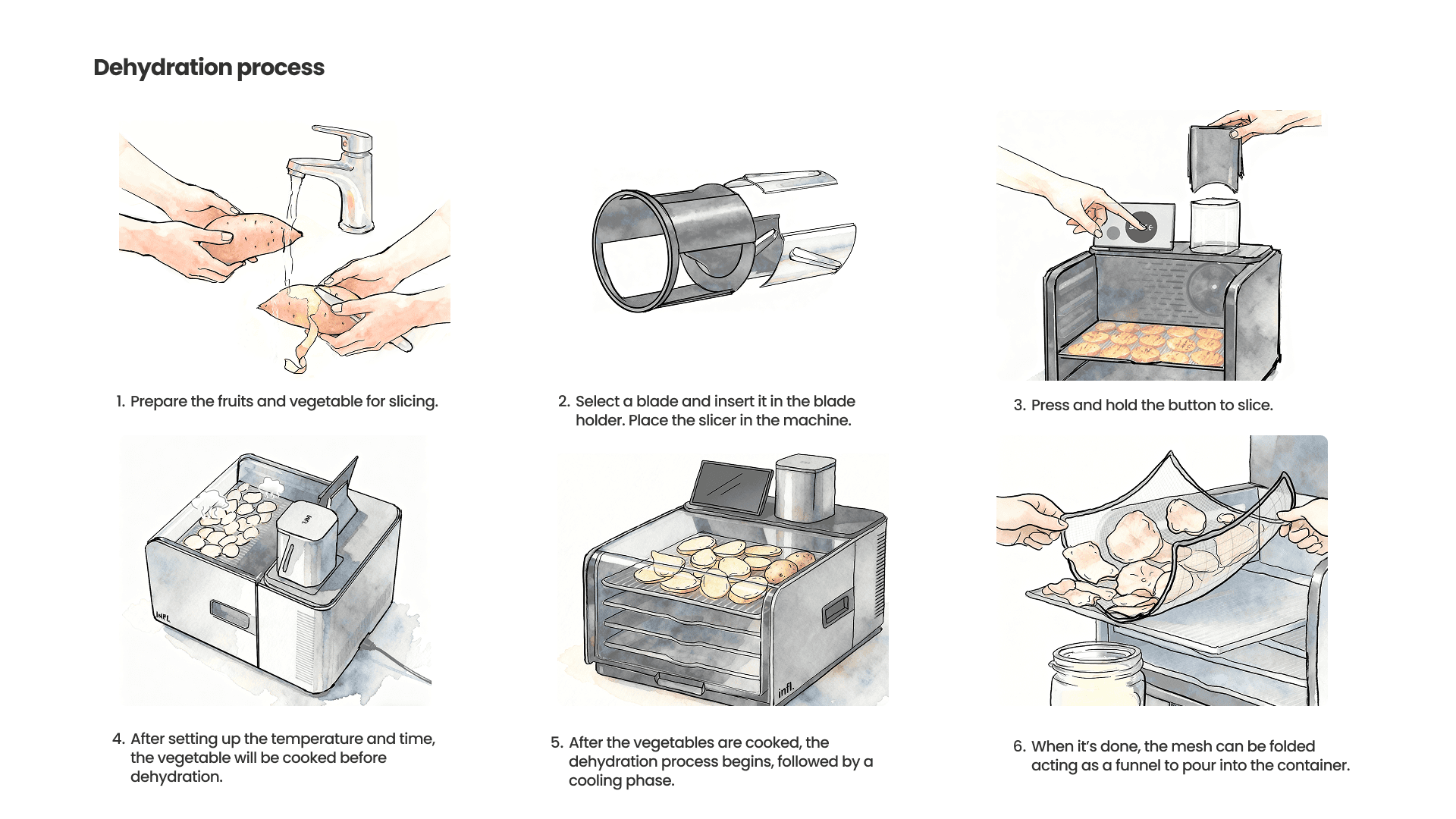
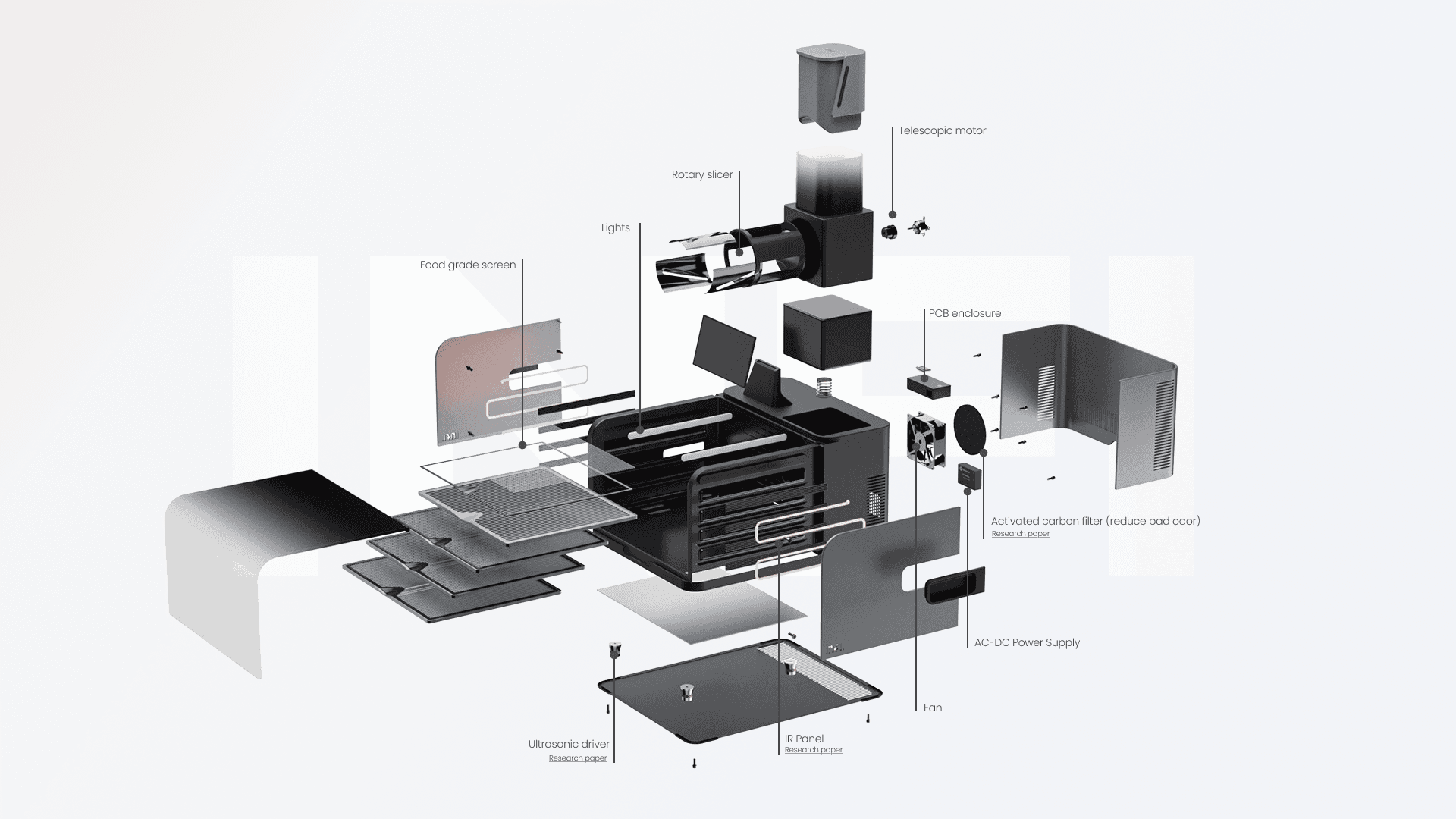
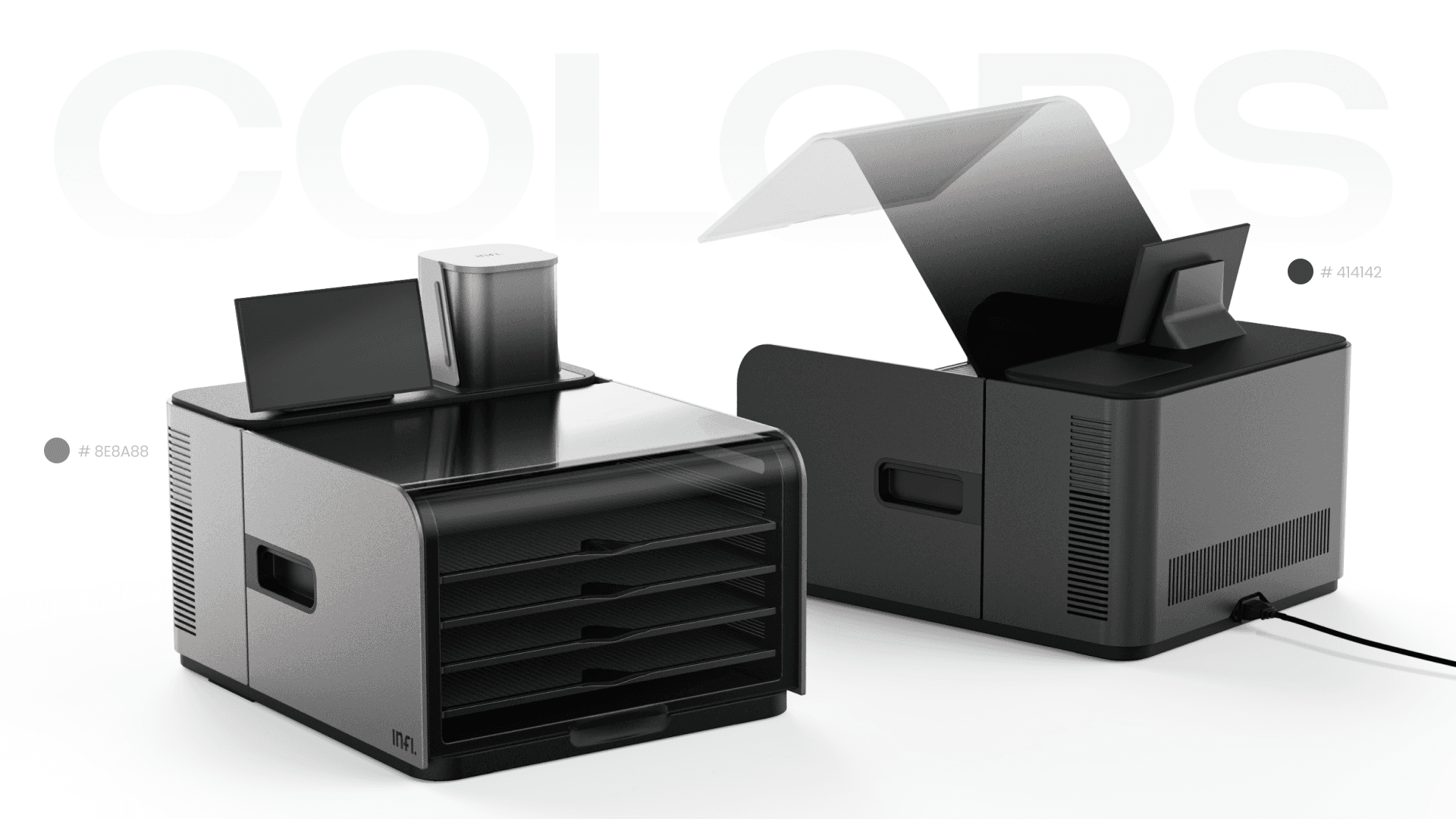
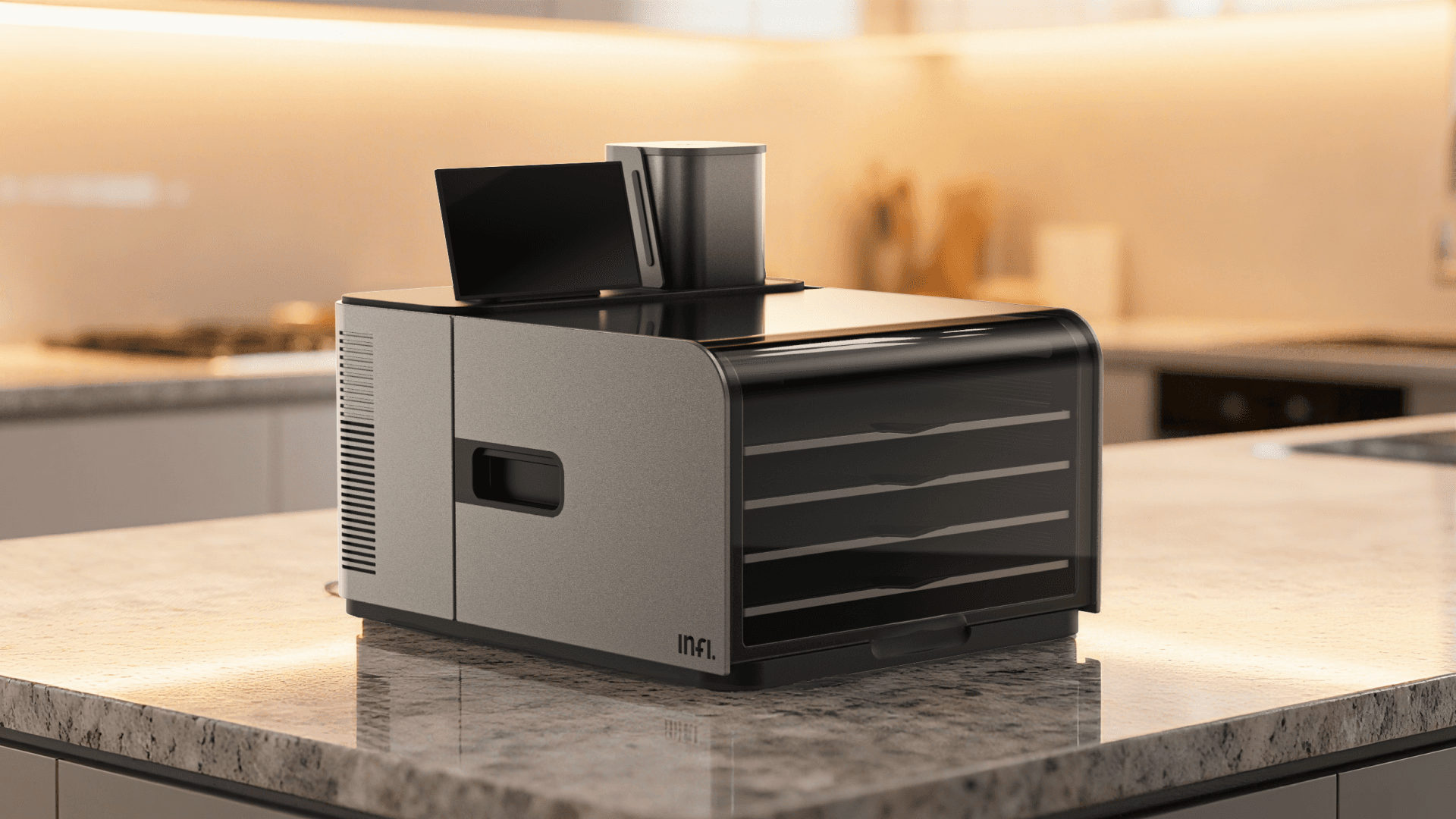
UI Design
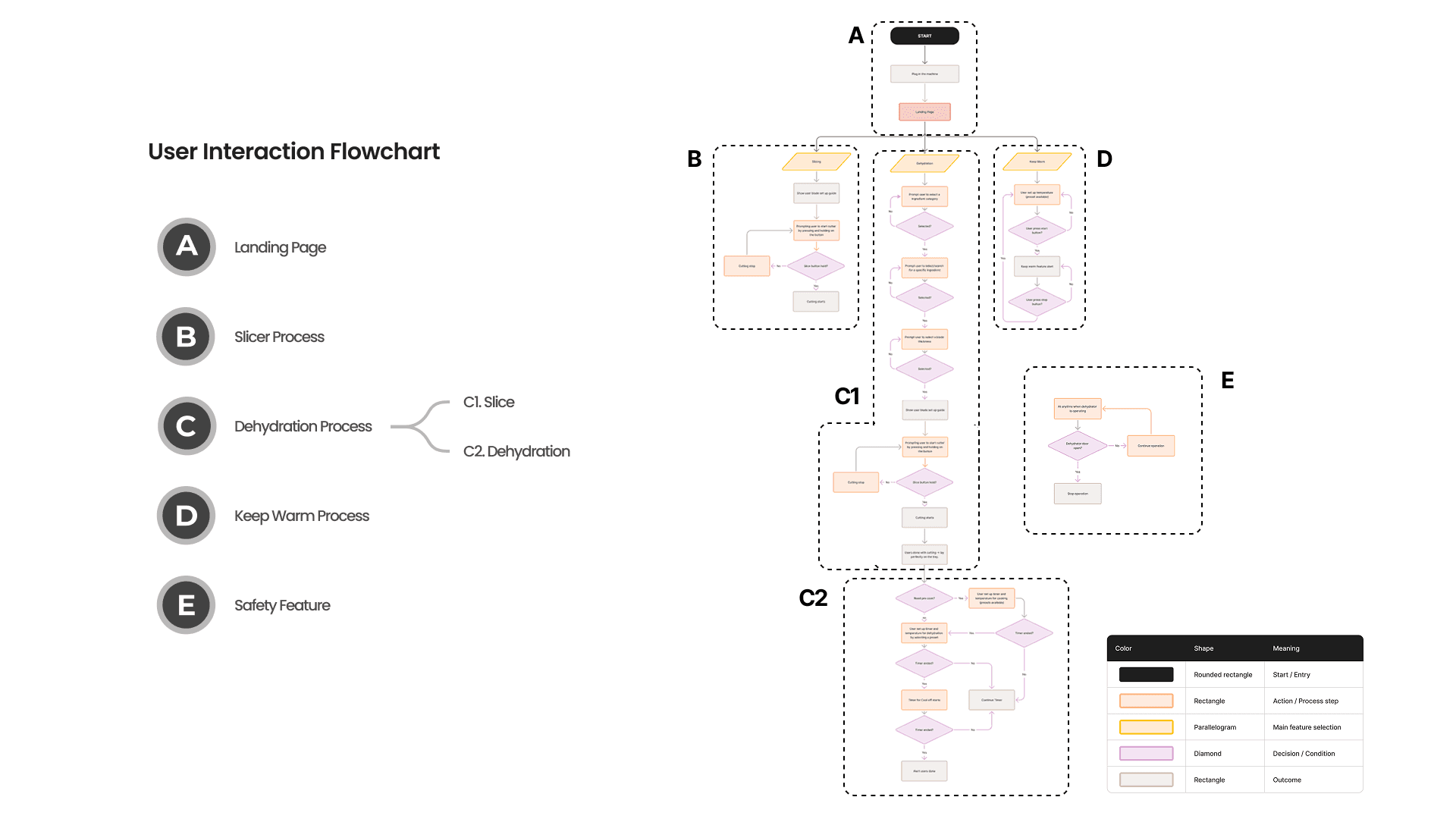
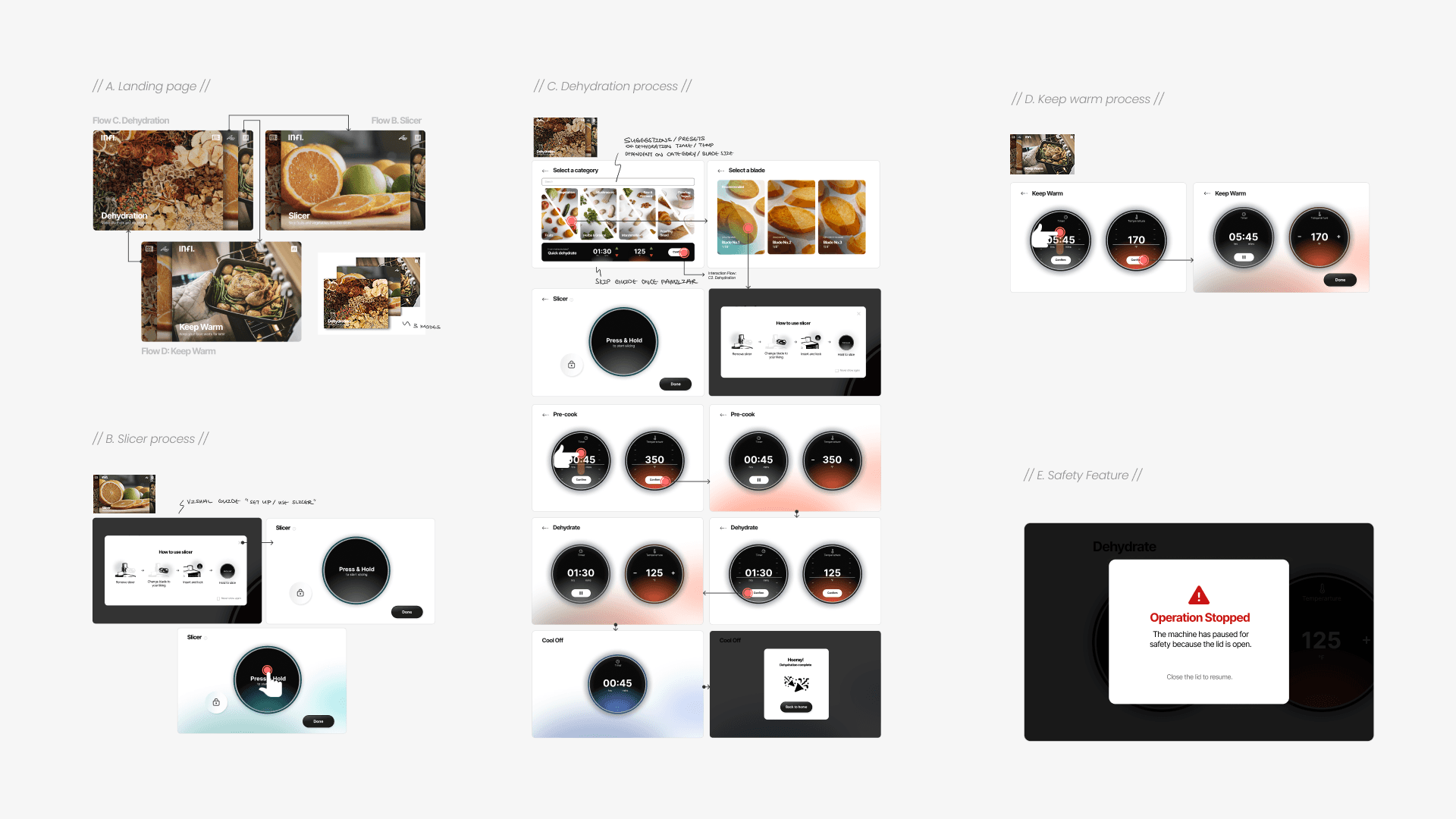
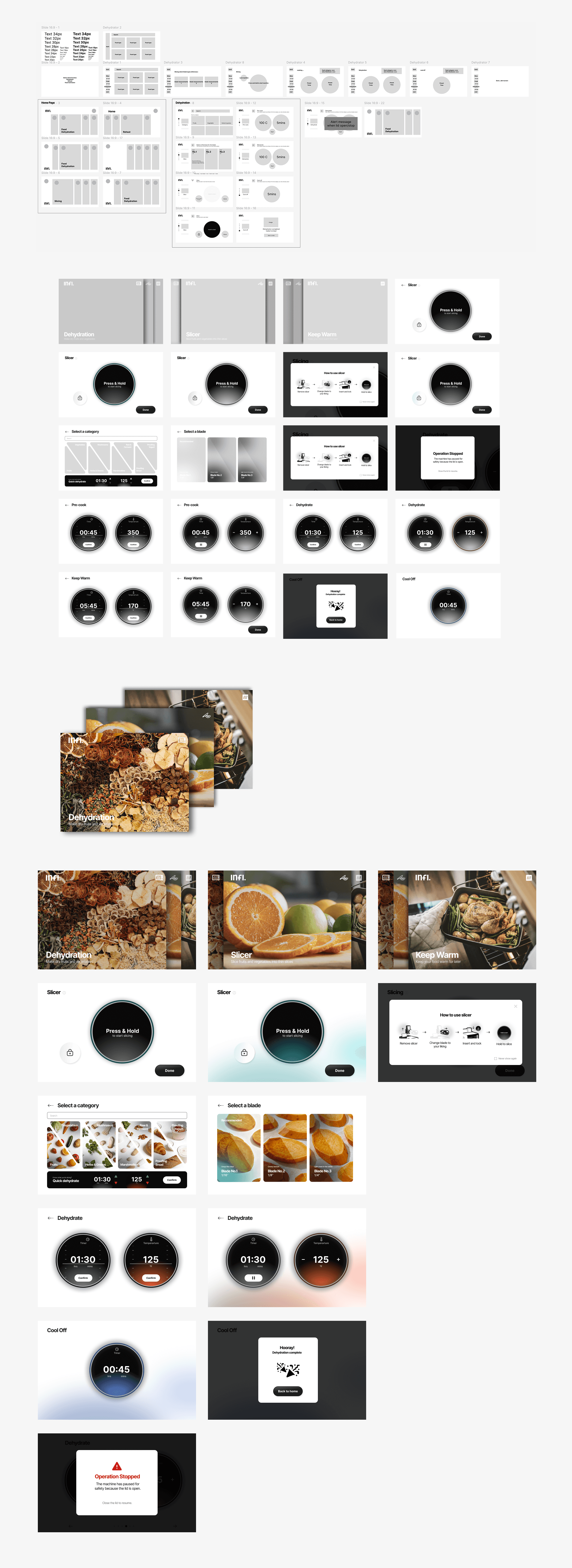
The UI transforms dehydration from a technical process into a guided experience. By simplifying settings, reducing manual monitoring, and integrating safety features, it lowers the barrier to regular food preservation, especially for busy families.

Design process
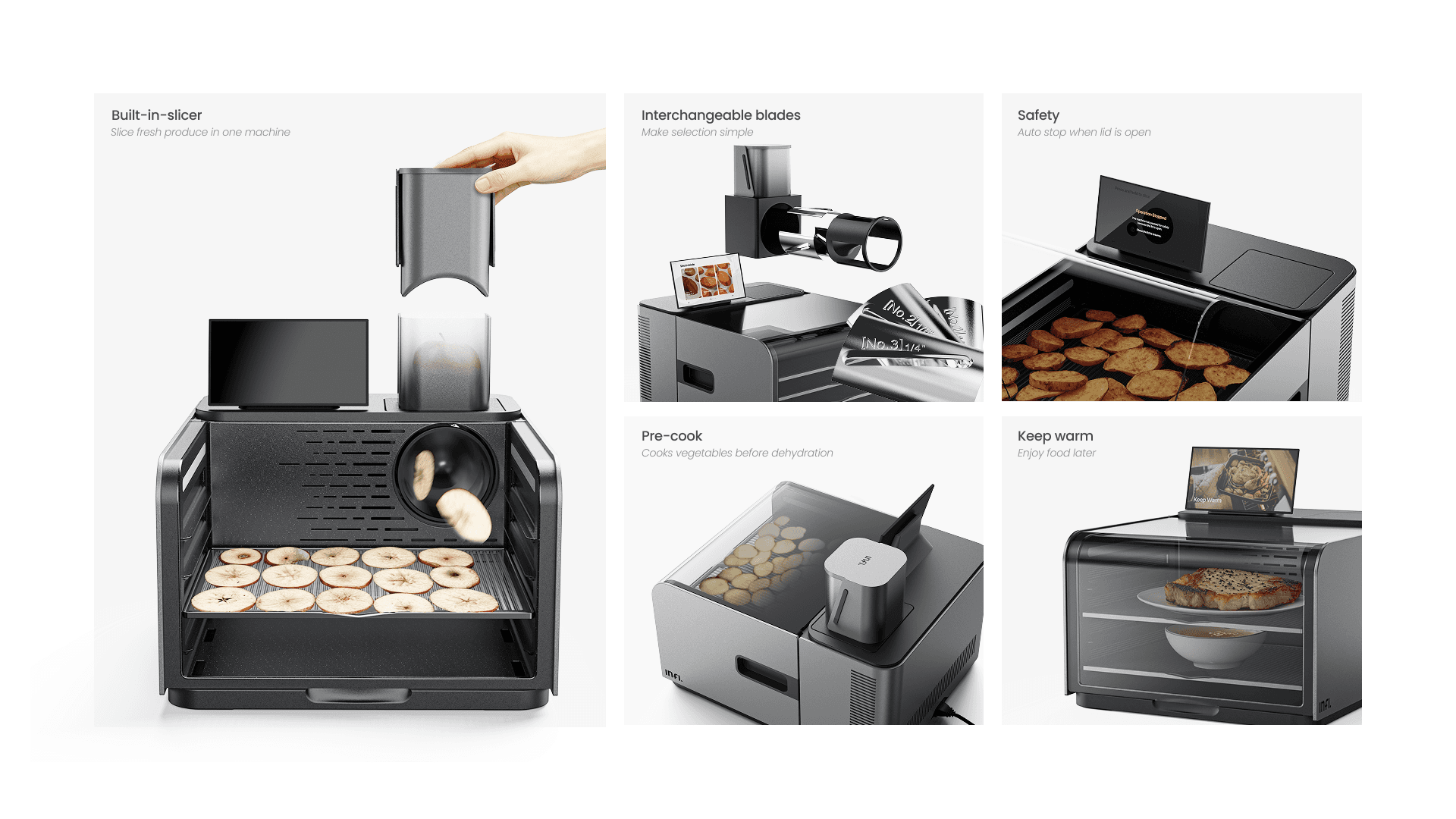
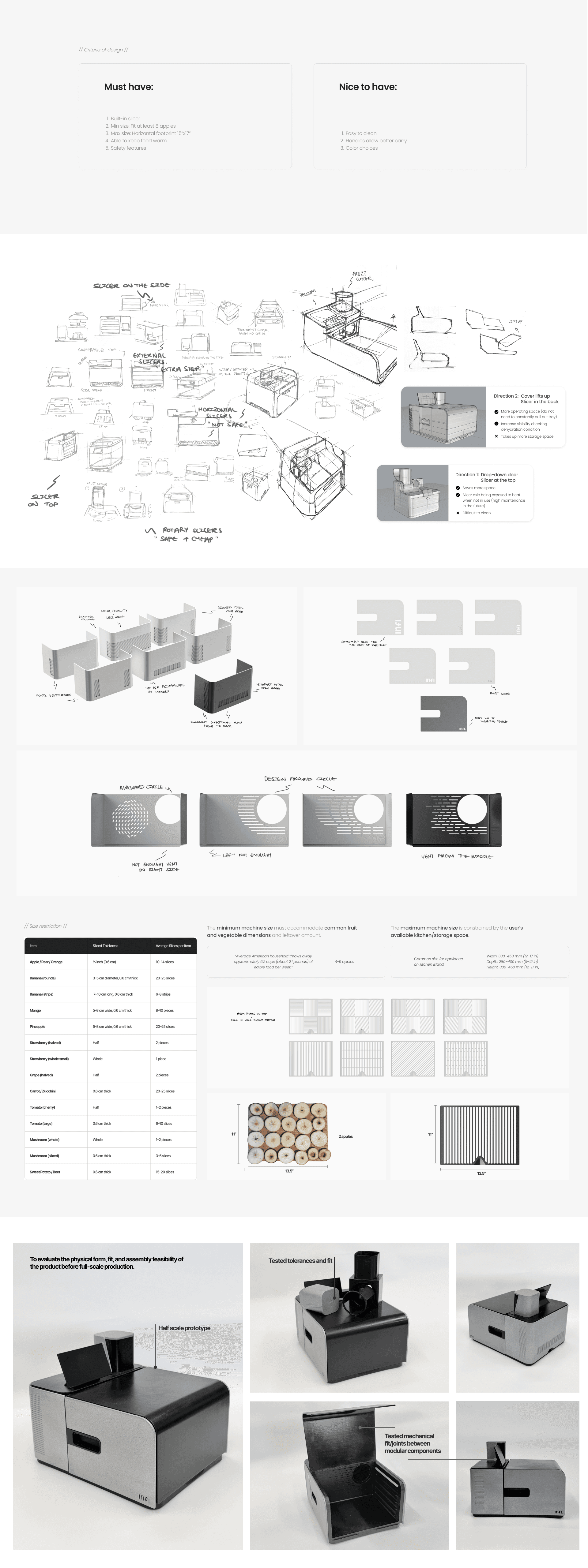
In the ideation phase, I first focused on integrating the built-in slicer, since it is the largest and most space-defining component of the machine. Its placement shaped the overall layout and internal structure. After determining a clear configuration, I shifted to airflow design which is an essential element in dehydration performance, exploring vent placement, air circulation paths, and perforation patterns to ensure even and efficient drying.
More Projects

Academic
INFI.
Multifunctional dehydrator designed to encourage efficient food preservation - saving time, minimizing tools, and reducing waste.
Project Type :
Individual
Industry :
Home appliance
Client :
GIA Houseware Competition
Project Duration :
12 weeks
Problem :
Food waste has long been a persistent issue, especially within households. Yet most existing solutions focus on managing food after it has already spoiled, leaving much of the food still destined to go to waste instead of preventing it in the first place.
CONCEPT :
My idea is to transform the form of fresh produce to extend its lifespan. After exploring various food preservation methods, I selected dehydration as the most suitable approach for my target audience: households with children.
UNDERSTANDING THE USER :
Through two rounds of interviews with households with children, I gained a deeper understanding of daily food management behaviors, challenges, and decision-making patterns.
A key insight was that most users do not perceive a strong need for a dedicated dehydrator solely to prevent food waste. Preserving food is important to them, but not enough to justify adding another appliance to an already crowded kitchen.
These insights informed a user persona centered around busy, family-oriented households seeking convenient, space-efficient, and low-effort ways to extend food lifespan while supporting healthier eating habits.
RESEARCH :
Keeping the user’s behavior in mind, I analyzed how users currently use food dehydrators and where friction occurs in the process.
Mapping current products revealed a disconnect between market offerings and user perception. Existing dehydrators are either single-purpose appliances that feel unnecessary or multifunction devices that add complexity. Yet interviews showed that households do not see enough value in owning a dehydrator solely for food preservation. This highlights an opportunity to rethink dehydration not as an extra appliance, but as an integrated, space-conscious kitchen solution.
KEY PROBLEMS :
What is preventing regular use for food preservation?
FINAL DESIGN :
UI Design
The UI transforms dehydration from a technical process into a guided experience. By simplifying settings, reducing manual monitoring, and integrating safety features, it lowers the barrier to regular food preservation, especially for busy families.
Design process
In the ideation phase, I first focused on integrating the built-in slicer, since it is the largest and most space-defining component of the machine. Its placement shaped the overall layout and internal structure. After determining a clear configuration, I shifted to airflow design which is an essential element in dehydration performance, exploring vent placement, air circulation paths, and perforation patterns to ensure even and efficient drying.
More Projects
Academic
INFI.
Multifunctional dehydrator designed to encourage efficient food preservation - saving time, minimizing tools, and reducing waste.
Project Type :
Individual
Industry :
Home appliance
Client :
GIA Houseware Competition
Project Duration :
12 weeks
Problem :
Food waste has long been a persistent issue, especially within households. Yet most existing solutions focus on managing food after it has already spoiled, leaving much of the food still destined to go to waste instead of preventing it in the first place.
CONCEPT :
My idea is to transform the form of fresh produce to extend its lifespan. After exploring various food preservation methods, I selected dehydration as the most suitable approach for my target audience: households with children.
UNDERSTANDING THE USER :
Through two rounds of interviews with households with children, I gained a deeper understanding of daily food management behaviors, challenges, and decision-making patterns.
A key insight was that most users do not perceive a strong need for a dedicated dehydrator solely to prevent food waste. Preserving food is important to them, but not enough to justify adding another appliance to an already crowded kitchen.
These insights informed a user persona centered around busy, family-oriented households seeking convenient, space-efficient, and low-effort ways to extend food lifespan while supporting healthier eating habits.
RESEARCH :
Keeping the user’s behavior in mind, I analyzed how users currently use food dehydrators and where friction occurs in the process.
Mapping current products revealed a disconnect between market offerings and user perception. Existing dehydrators are either single-purpose appliances that feel unnecessary or multifunction devices that add complexity. Yet interviews showed that households do not see enough value in owning a dehydrator solely for food preservation. This highlights an opportunity to rethink dehydration not as an extra appliance, but as an integrated, space-conscious kitchen solution.
KEY PROBLEMS :
What is preventing regular use for food preservation?
FINAL DESIGN :
UI Design
The UI transforms dehydration from a technical process into a guided experience. By simplifying settings, reducing manual monitoring, and integrating safety features, it lowers the barrier to regular food preservation, especially for busy families.
Design process
In the ideation phase, I first focused on integrating the built-in slicer, since it is the largest and most space-defining component of the machine. Its placement shaped the overall layout and internal structure. After determining a clear configuration, I shifted to airflow design which is an essential element in dehydration performance, exploring vent placement, air circulation paths, and perforation patterns to ensure even and efficient drying.